
Why ADM is Different
ADM isn't new to Return-to-Work—we helped build the playbook. With 36+ years in workers' compensation and roots in Vocational Rehabilitation, we've spent decades inside the real mechanics of work: essential functions, job demands, employer operations, and what it truly takes to return someone to work safely and appropriately.
What makes that matter? Because RTW doesn't fail due to lack of effort—it fails when the team doesn't have a complete, end-to-end understanding of the claim and the workplace. ADM does.
What We Offer
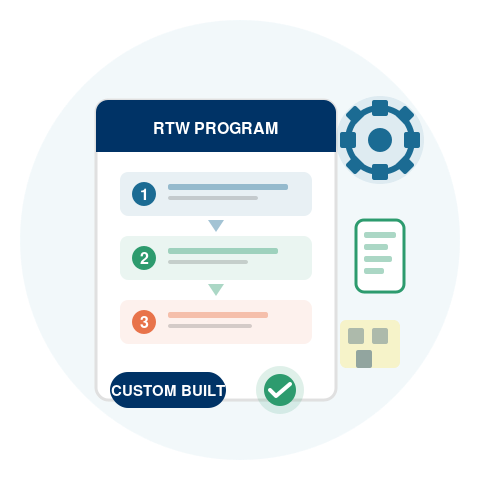
RTW Program
Implementation
Custom RTW programs, policies, and process workflows built around real operations and job functions.
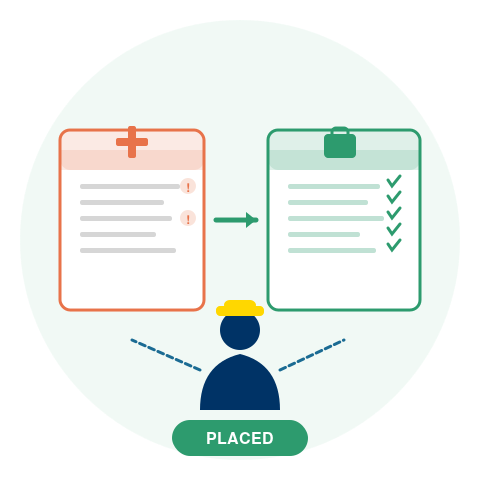
Transitional Duty &
RTW Placement
Restrictions-based placements, modified duty options, and employer coordination to keep claims moving.
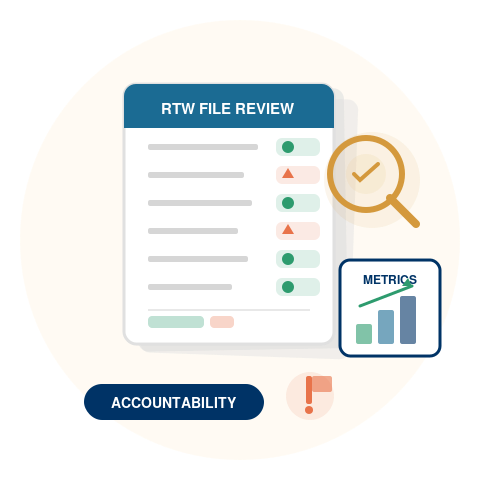
RTW File Review &
Program Oversight
File-level review, RTW strategy assessment, and program monitoring to identify delays and drive accountability.
Built on Vocational Rehabilitation, strengthened by Medical Case Management
Most RTW programs start with paperwork. Ours starts with work reality:
- Deep employer/job knowledge from Voc Rehab: job demands, physical requirements, transferable tasks, and practical modified duty options
- Medical Case Management expertise to align restrictions, treatment trajectory, and recovery milestones with realistic RTW planning
- A clear focus on the outcome every program is measured by: reducing unnecessary TTD and lost time while supporting a safe return
We collaborate with the full RTW team—and push past "remain off work"
Our case management background means we're fluent in how claims actually move. When a case manager is assigned, we work closely with them—alongside providers and employers—to explore every reasonable RTW pathway, including modified duty, transitional duty, alternative tasks, reduced schedules, and creative job accommodation options.
And when a provider's default is "remain off work," we don't stop there. We dig deeper to understand the clinical rationale, clarify functional restrictions, and identify whether there's a safe, restrictions-based option that keeps the employee connected to work. That extra level of inquiry is often the difference between a stalled lost-time claim and forward progress.
End-to-end workers' comp perspective
Claims don't move forward in a straight line. RTW intersects with medical progress, restrictions, employer capacity, documentation quality, and claim strategy. ADM brings a full-system view—so plans don't stall, communication doesn't drift, and opportunities don't get missed.
Execution, accountability, and defensible documentation
We don't just "recommend RTW." We drive it with clear steps, tight timelines, and clean documentation that supports:
- faster decision-making for claims teams
- better coordination with employers
- fewer delays caused by unclear restrictions or vague next steps
- stronger file quality and consistency across a program
Bottom line: ADM combines the work expertise of Vocational Rehabilitation with the clinical coordination strength of Medical Case Management to deliver RTW that's practical, measurable, and built to reduce lost time.
Choose the RTW service that fits your program.
From program design to placement coordination to file review—ADM delivers RTW that reduces lost time and keeps employees connected to work.
RTW Program Implementation
Build RTW policies, processes, and workflows from day one—aligned with real operations and job functions.
Learn More →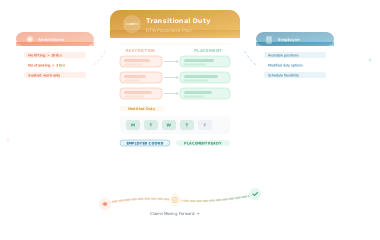
Transitional Duty & RTW Placement
Restrictions-based placements, modified duty options, and employer coordination to keep claims moving.
Learn More →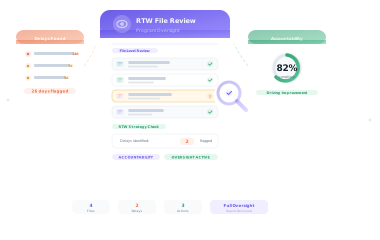
RTW File Review & Program Oversight
File-level review and RTW strategy assessment to identify delays and drive accountability.
Learn More →